Amazon Aurora PostgreSQL now supports direct querying of Apache Iceberg and Parquet data in your data lake
Story summary
Amazon Aurora PostgreSQL now lets you directly query Apache Iceberg and Parquet data stored in your data lake alongside live operational data—no ETL pipelines required. Powered by DuckDB embedded within Aurora, this capability enables single queries that join transactional and historical data using
📌 Key Highlights & Takeaways
- Amazon Aurora PostgreSQL now lets you directly query Apache Iceberg and Parquet data stored in your data lake alongside live operational data—no ETL pipelines required.
- Powered by DuckDB embedded within Aurora, this capability enables single queries that join transactional and historical data using
Today, we’re announcing a new capability for Amazon Aurora PostgreSQL that you can use to directly query operational data together with data stored in your data lake in Apache Iceberg and Apache Parquet formats, using your existing PostgreSQL applications and tools. By eliminating the need to extract, transform, and load (ETL) structured data from data lakes into your operational database, you can reduce operational complexity and simplify application development. You can also use Aurora PostgreSQL to query data from data lakes managed in Iceberg REST Catalog (IRC)-compatible catalogs, giving you access to data across a breadth of analytics systems without moving or duplicating it. Whether you’re powering real-time dashboards, enriching transactions with historical context, or building AI agents that reason over both live and archived data, you can now do it all through a single, familiar interface.
Previously, if your application needed to combine recent transactional data in Aurora with historical records stored in Amazon S3, a common approach was to build reverse ETL pipelines that duplicated data, increased infrastructure costs, and required ongoing engineering effort to keep everything synchronized. This challenge only grows as you increasingly embed AI agents into your applications, where it is impractical to predict and pre-replicate every dataset an agent might need.
DuckLabs, the team that maintains the DuckDB project, recently joined Amazon, and this capability is an example of how the efficiency of DuckDB is being integrated into our services. DuckDB is now embedded directly within Aurora PostgreSQL, so you can query live operational data (including uncommitted writes) alongside your data lake in a single query. Query processing stays within Aurora, with no additional network hops and no ETL pipelines that duplicate data. You can query Apache Iceberg tables managed through the AWS Glue Data Catalog, as well as Parquet and Iceberg data stored in Amazon S3 and S3 Tables. You do all of this using familiar PostgreSQL syntax and your existing applications and tools.
We’re excited to bring the speed and simplicity of DuckDB directly into Aurora PostgreSQL, so you and your agents can query and combine operational and Iceberg data using the familiar PostgreSQL applications, tools, and endpoints already in use. By building this capability around DuckDB, future improvements to the open source engine can continue to bring performance and functionality gains to Aurora and other AWS services.
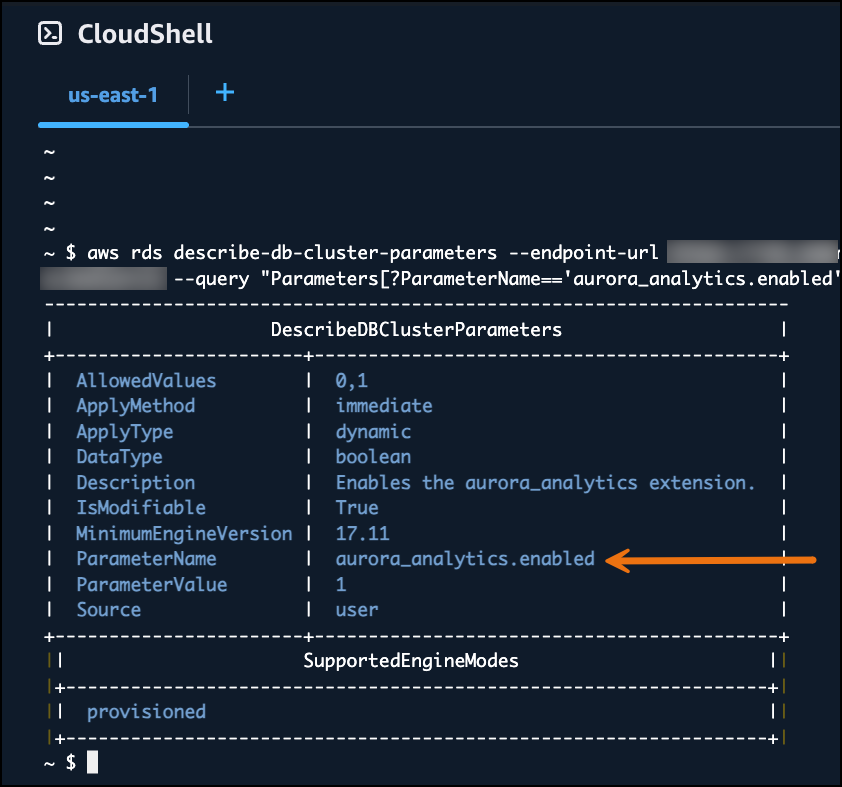
What is new This capability is supported on two Aurora PostgreSQL major versions: 17 (starting with 17.11) and 18 (starting with 18.6). To use it, you create an Aurora PostgreSQL cluster, attach an IAM role with the AuroraAnalytics feature, and enable the aurora_analytics extension. The IAM role is what gives Aurora access to your data in Amazon S3 and the AWS Glue Data Catalog. You then create foreign tables that point to your Iceberg or Parquet data in the data lake, and query them using familiar PostgreSQL syntax. You can complete this setup through the Amazon RDS console , or with any PostgreSQL client such as psql. The process is well documented in the Aurora PostgreSQL documentation .
You can query data across external IRC-compatible catalogs through AWS Glue Data Catalog federation. You register the external catalog once with Glue, and then create foreign tables for the tables you want to query, the same way you would for any Glue-native table. A single query can then join data stored in Aurora with Iceberg tables registered across multiple catalogs, so applications get a unified view without moving data or replacing your existing catalog investments.
Aurora also applies optimizations such as predicate pushdown and column pruning so that only the relevant data is read. This keeps queries efficient even as the underlying data grows. Frequently accessed data is also cached in your Aurora instance, so subsequent queries against the same data return faster. You can inspect this behavior per query using aurora_analytics_stat_statements() , which reports metrics such as rows scanned, bytes read from Amazon S3, and cache hits.
To see how direct querying works, I connected to my Aurora PostgreSQL database using psql and created the extension:
Cryptographic Security & Key Generator
Generate entropy-tested high-security keys and encryption-grade tokens.
Source: AWS News Blog.
Read the full story at the original source ↗
For questions: mrsmithcons@gmail.com.
☁️ Complete Cloud Credit Application Guide & Architecture Specs
Direct application templates, fast-track partner codes, and architecture benchmarks.
⚡ Access Cloud Playbook ➔More from FreeSky Cloud


 🗺️ FreeSky GeoData
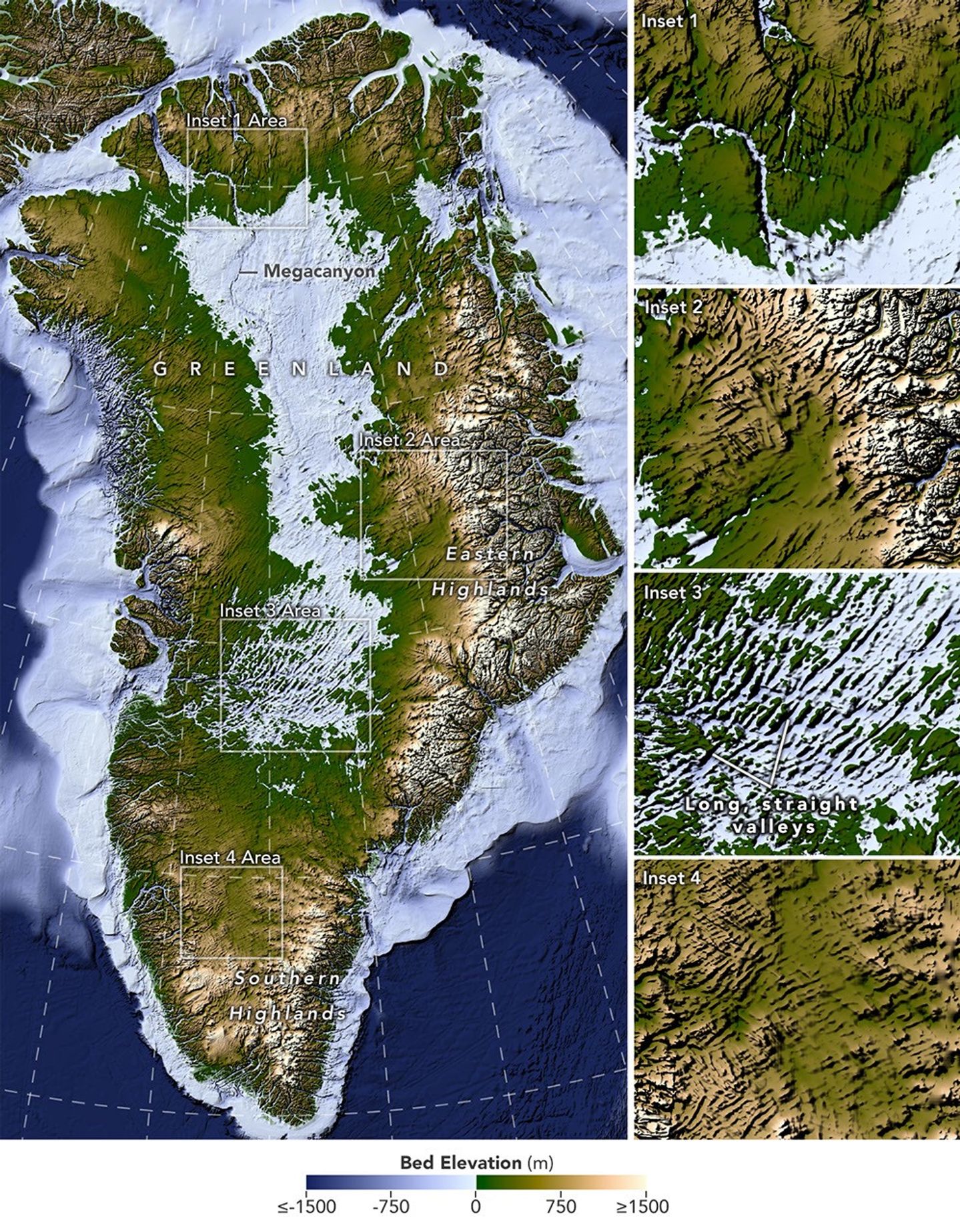
Uncovering the Valleys Hidden Below Greenland’s Ice
A new map of the terrain beneath the Greenland Ice Sheet links hundreds of valleys that previous maps missed o...
Hypersonic weapons, quantum tech: What India needs for future wars
Hypersonic weapons, quantum tech: What India needs for future wars...
 🤖 WinBar AI
Em meio à proibição nacional, representantes da Caixa viajam para estudar o modelo de apostas do Uruguai
Quebrando a cobertura relatada pelo iGaming Brazil: Em meio à proibição nacional, representantes da Caixa viaj...
 ₿ Lucky Satoshi
O preço do Bitcoin sobe acima de US$ 85.000 com dados de inflação mais leves do que o esperado
Revista Bitcoin O preço do Bitcoin sobe acima de US$ 85.000 com dados de inflação mais leves do que o esperado...