Accelerating agentic RL and evaluation research velocity with 45x faster GKE Agent Sandbox

Story summary
When scaling up agentic reinforcement learning (RL) and evaluation across massive parallel rollouts, frontier AI labs inevitably hit a bottleneck: Expensive GPU clusters sit idle, waiting minutes for CPU sandbox cold-starts, plus thousands of multi-gigabyte SWE-bench-style image pulls and scheduling
📌 Key Highlights & Takeaways
- When scaling up agentic reinforcement learning (RL) and evaluation across massive parallel rollouts, frontier AI labs inevitably hit a bottleneck: Expensive GPU clusters sit idle, waiting minutes for CPU sandbox cold-starts, plus thousands of multi-gigabyte SWE-bench-style image pulls and scheduling
When scaling up agentic reinforcement learning (RL) and evaluation across massive parallel rollouts, frontier AI labs inevitably hit a bottleneck: Expensive GPU clusters sit idle, waiting minutes for CPU sandbox cold-starts, plus thousands of multi-gigabyte SWE-bench -style image pulls and scheduling backlogs. It’s a sandbox infrastructure problem that silently slows down your research and burns your training budget.
To solve this fundamental infrastructure bottleneck, today we are introducing GKE Agent Sandbox optimized for RL along with the Agent Sandbox RL orchestration SDK , plus native integrations for popular RL gyms and harnesses, now generally available.
As the operating system for modern AI, Kubernetes has evolved to power massive GPU/TPU training clusters and distributed inference. Now Kubernetes is expanding to drive the next AI compute frontier: agents. But unlike static workloads, agentic workloads evolve rapidly, so infrastructure must evolve just as fast. Rather than guessing at what RL researchers needed, we placed Kubernetes itself on an auto-research and verification loop driven by performance benchmarks and evaluations . We used heavy agentic benchmarks like SWE-bench to intentionally stress-test and break our own clusters. Every bottleneck that surfaced — from etcd timeouts to GPU idle spikes — was fed back into our development cycle to refine GKE’s core primitives.
This resulted in a purpose-built sandbox layer for agentic RL and eval workloads that features:
With this new primitive, AI labs and agent-native startups can now reliably run large scale agentic RL trajectories and evals simultaneously, minimizing accelerator idle time and drastically accelerating their research velocity.
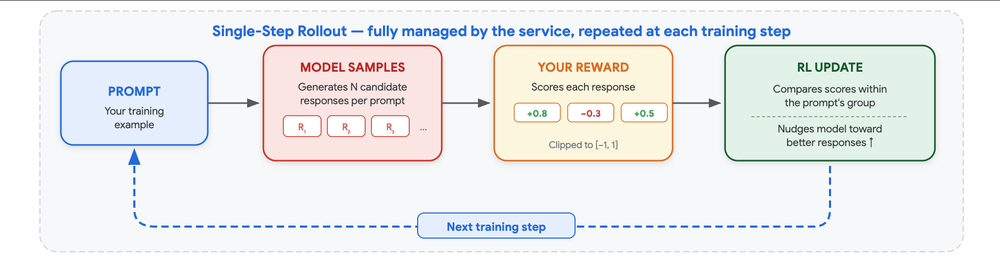
Before we talk about the solution, let’s be precise about what makes agentic RL so demanding for infrastructure in the first place. In a standard agentic RL loop, an LLM policy generates actions like code snippets on GPUs and executes them inside isolated CPU sandboxes to observe a reward signal. However, when scaling up this loop to support tens of thousands of parallel rollouts, three critical infrastructure bottlenecks emerge:
These are not hypothetical problems. They are the daily reality for frontier AI labs training state-of-the-art agents.
To fan-out the code execution sandboxes, we set up a relatively modest cluster — a 10-node gVisor sandbox pool with GKE image streaming enabled, the Agent Sandbox controller, and an in-cluster SDK driver to claim warm pods. We tested various strategies and setups including a large number of images and high cardinality.
Cryptographic Security & Key Generator
Generate entropy-tested high-security keys and encryption-grade tokens.
Source: Cloud Blog.
Read the full story at the original source ↗
For questions: mrsmithcons@gmail.com.
☁️ Complete Cloud Credit Application Guide & Architecture Specs
Direct application templates, fast-track partner codes, and architecture benchmarks.
⚡ Access Cloud Playbook ➔More from FreeSky Cloud


 ⚡ CyberTech 568
OpenAI launches Dots, its bubbly agentic avatar
Dots are meant to operate independent of any specific hardware or interface, pursuing user-defined goals conti...
 🗺️ FreeSky GeoData
Solar Power Architecture & Off-Grid Battery Redundancy for 3D Photogrammetry
Comprehensive 2026 research dossier and telemetry report on Solar Power Architecture & Off-Grid Battery Redund...
 🤖 WinBar AI
DraftKings ‘Free Bet’ Promos Targeted Problem Gamblers Using AI: Report
Breaking coverage reported by AboutLawsuits.com: DraftKings ‘Free Bet’ Promos Targeted Problem Gamblers Using ...
He Flew Me with Drones for Another Girl - FULL | Reelshort
He Flew Me with Drones for Another Girl - FULL | Reelshort .realm1...